The Wedding Photo Shot List: What to Include and How to Use It
The Wedding Photo Shot List: What to Include and How to Use It
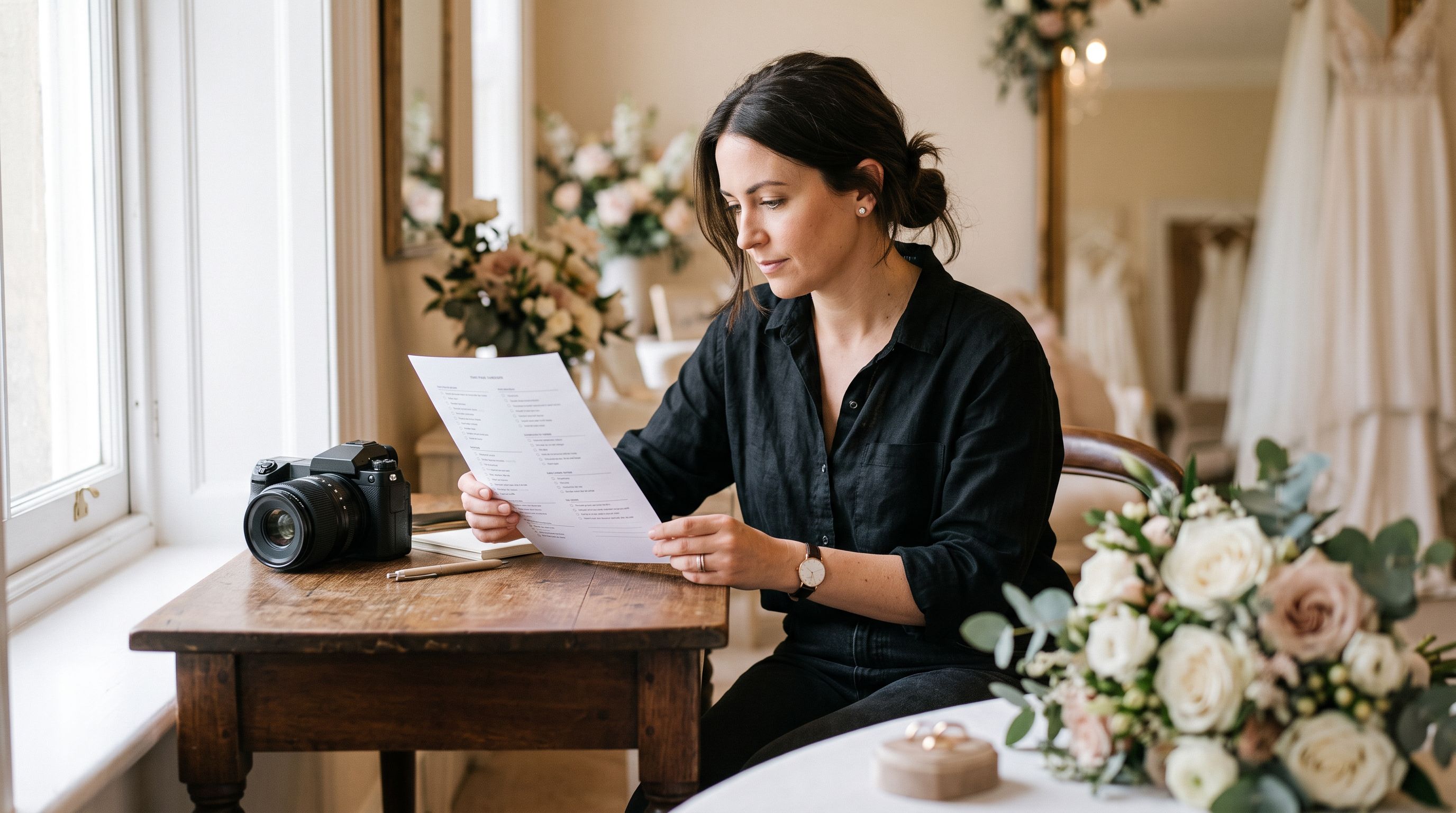
A shot list is the agreed set of photos a couple does not want to miss. It is not a script for the photographer. Good photographers know how to shoot a wedding. The list covers what only you know: which relatives matter, which details are meaningful, and which moments are specific to your day.
This guide covers what belongs on a wedding shot list, how long it should be, and how to use it on the day so it helps instead of slowing things down. You can build your own with our free wedding shot list generator.
What a shot list is for
Without a list, three things tend to go wrong:
- Family groups are forgotten. Someone realises at the reception that there is no photo with the bride's grandparents.
- Details are missed. The handwritten vows, a family heirloom, a special pair of shoes.
- Time is wasted. The photographer waits while people are found for the group shots.
A list solves these by deciding in advance what must be captured and by whom.
How long should it be?
One page. A list that runs to three pages does not get used. The photographer will capture hundreds of moments without needing instructions. The list is for the 20 to 40 shots that would be a problem if missed.
A good split is:
- 10 to 20 family group combinations
- 5 to 10 details and keepsakes
- A few reception moments that are easy to miss
What to put on it
Getting ready
- The dress, suit, rings and shoes, laid out
- Invitations and flowers
- A family heirloom, if there is one (a watch, a locket, a bible)
- Each partner with parents or close friends while getting ready
First look and portraits
- The first look, if you are doing one
- Couple portraits in two or three locations
- The couple with the full wedding party
- Each partner with their closest friends
The ceremony
- The entrance, from the front and from behind
- Each partner's reaction as the other arrives
- The ring exchange
- The kiss
- The exit
A note: ask your venue or officiant about restrictions. Some ceremonies limit flash or where a photographer can stand, which changes which of these are possible.
Family groups
This is the part that most needs a list. Name each combination. "Family photos" is not a shot. "Couple with the bride's parents and grandparents" is.
Start with the largest group and work down to the smallest. A typical order:
- Both families together
- Partner A's immediate family
- Partner A's extended family
- Partner B's immediate family
- Partner B's extended family
- Couple with each set of grandparents
- Couple with siblings
- Couple with each parent
Mention any sensitive situations privately to the photographer, such as divorced parents who should be photographed separately.
The reception
- The room before guests arrive, with table settings and decor
- The entrance
- The cake cutting
- Toasts, including the reactions of the people listening
- The first dance, and parents watching it
- The couple with each table, if you want it
Moments people forget
- A candid of the couple alone, just after the ceremony
- The older guests, who are often under-photographed
- The children
- The end of the night
How to use the list on the day
Give a copy to the photographer ahead of time, not on the morning. They can plan where to shoot each group.
Assign a family member as the gatherer. The photographer calls names from the list, and the helper rounds up each person. This is the single biggest time saver on the day. Pick someone who knows both families and is not in the wedding party.
Schedule the group shots. Allow about 5 minutes per group at the start, and fewer for small ones. Do them straight after the ceremony while everyone is still there, ideally before drinks.
Keep an eye on what is flexible. A list is a guide. If the light is perfect for portraits, shoot them. Trust the photographer to adjust.
What the list does not cover: your guests' photos
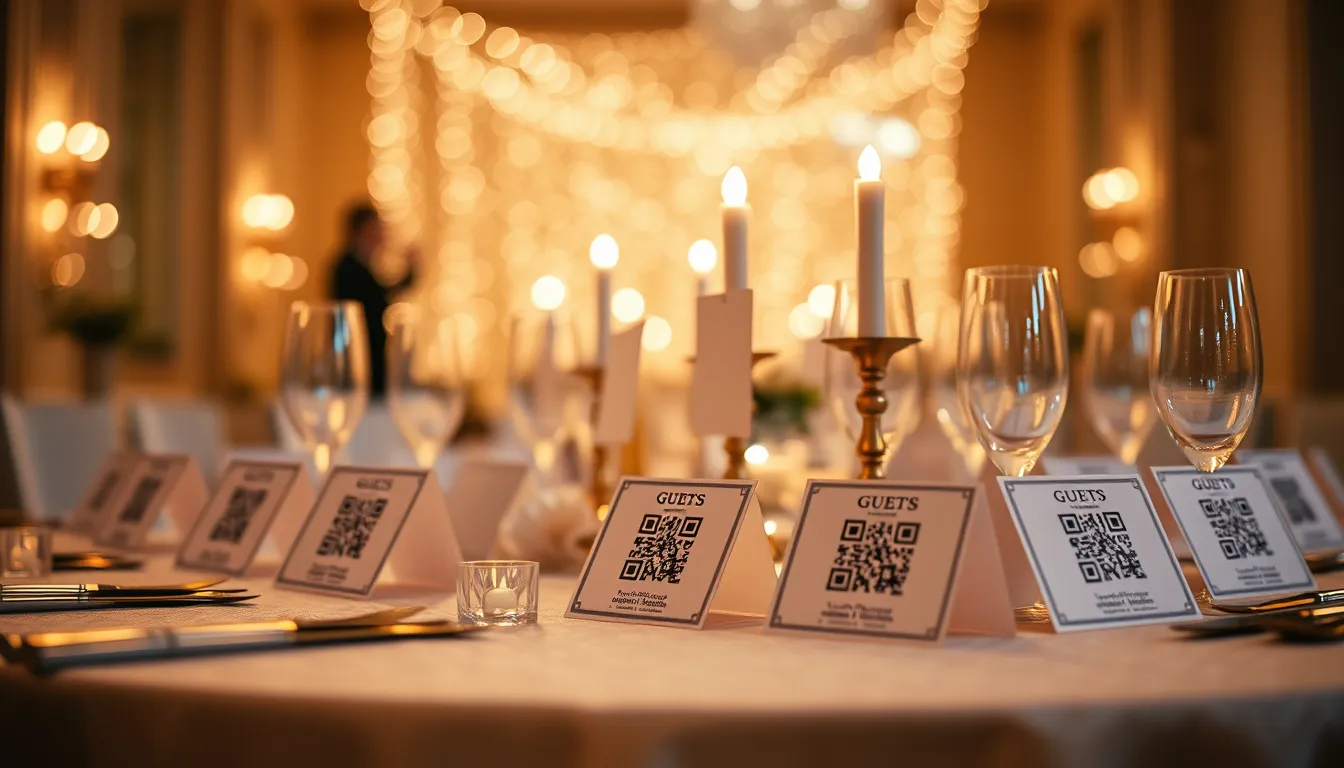
The shot list covers the photographer's work. Your guests will also take a lot of photos, often catching the moments no list could predict. If you want those, put a QR code on each table so guests can add their photos to one album. We cover how in how to collect guest photos with QR codes.
After the wedding, the photographer's selects and the guest photos can sit in the same gallery, and guests can find their own with a selfie. Our guide to sharing wedding photos with guests compares the ways to do it.
Common mistakes
- Too many groups. Twenty combinations take longer than you think. Cut to the ones that matter.
- Vague entries. "Friends" gives the photographer nothing to work with. Name the group.
- Giving it to the photographer on the day. They need time to plan.
- Forgetting the gatherer. Without one, the group shots run long.
- Treating it as rigid. Leave room for what you could not plan.
A starter template
You can copy this and edit it:
Getting ready: dress, suit, rings, shoes, flowers, heirloom, each partner with parents
Portraits: first look, couple, couple with wedding party, each partner with close friends
Ceremony: entrance, ring exchange, kiss, exit
Family groups: both families, each side, grandparents, siblings, parents
Reception: room, entrance, cake, toasts, first dance, parents watching
Candids: older guests, children, the end of the night
Build yours in minutes
Our free shot list generator creates a printable list organised by part of the day, which you can edit and send to your photographer. For more planning tools, see the wedding timeline builder.