Privacy in Event Photography: GDPR Compliance Explained
Privacy in Event Photography: GDPR Compliance Explained
Event photos are personal. Sometimes they are very personal.
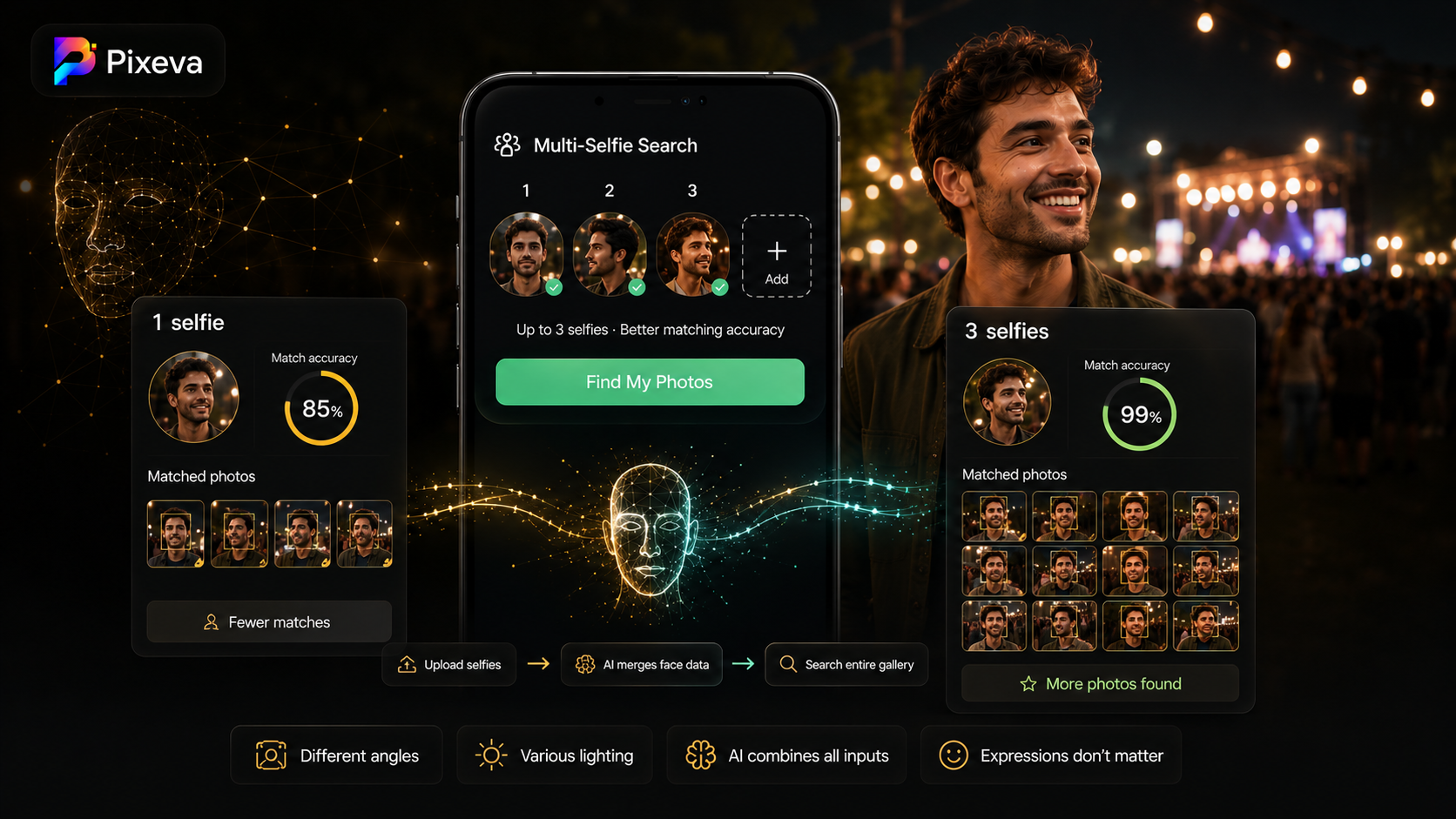
When a gallery uses face search, emotion cues, or analytics, you are no longer just “sharing JPEGs.” You may be processing personal data—and in some cases special category data under GDPR (for example biometric data used to uniquely identify someone).
This guide explains, in plain language, what GDPR expects, what guests should know, and what responsible event photo platforms should do to stay trustworthy.
Disclaimer: This article is educational, not legal advice. GDPR interpretation depends on your role (controller/processor), jurisdiction, and facts. Consult qualified counsel for your specific setup.
Why privacy matters in event photography
Photos are data
Under GDPR, personal data includes anything that identifies or relates to a person. Event photos often:
- Show faces and context (location, relationships, beliefs in some cases)
- Appear alongside metadata (timestamps, device info)
- Become searchable through AI features
“Convenience” can’t erase responsibility
Guests want fast access. Organizers want fewer support tickets. But trust is the prerequisite—especially for weddings, schools, corporate events, and anything involving minors or vulnerable attendees.
GDPR in one paragraph (the parts that matter for photos)
The General Data Protection Regulation (GDPR) is an EU framework that governs how organizations collect, use, store, and delete personal data for people in the EU/EEA (and impacts many global services).
Core ideas:
- Lawfulness — you need a valid legal basis to process data
- Transparency — people should understand what happens to their data
- Purpose limitation — use data for stated purposes, not unrelated surprises
- Data minimization — collect/process only what you need
- Security — protect data with appropriate technical and organizational measures
- Rights — access, correction, deletion, export, objection (where applicable)
- Accountability — be able to demonstrate compliance
When face recognition becomes “special” data
Face templates used to identify a person can be treated as biometric data in many interpretations—especially when used for unique identification.
That matters because GDPR applies stricter rules to special categories of personal data.
Practical takeaway for event platforms:
If you run selfie search / face indexing, treat it as high sensitivity:
- Clear upfront explanation
- Explicit consent where required
- Easy withdrawal / deletion paths
- Strong security controls
What “good” looks like for guests (UX + compliance)
1) Clear consent before biometric processing
Guests should see:
- What you are doing (example: “We analyze your selfie to find your photos”)
- Why you are doing it
- What data is created (example: face embeddings / matches)
- How long it is kept
- How to delete it
Consent should be active (not buried pre-checked boxes).
2) Easy deletion and control
Guests should be able to:
- Remove their biometric processing / face data
- Request deletion of personal data where applicable
- Understand what remains (example: photos may still exist in the gallery, but their personal search data is removed—wording depends on your architecture)
3) Data retention that matches reality
“Forever by default” is a red flag unless you have a strong legal basis and transparency.
Better practice:
- Retention aligned to event type and contract
- Automated deletion schedules where possible
- Reminders before gallery expiry
4) Security by design
Minimum expectations:
- Encryption in transit (TLS)
- Strong access controls for organizers vs guests
- Audit-friendly logging for administrative actions (without creepy surveillance of guests)
Common myths (and corrections)
Myth 1: “We’re not in the EU, so GDPR doesn’t matter.”
If you have EU users or market to them, GDPR can still apply. Also, many regions have similar laws—treat privacy as global hygiene.
Myth 2: “It’s a public event, so privacy doesn’t apply.”
Public setting does not automatically erase personal data rights. Consent and purpose still matter—especially for identification tech.
Myth 3: “Guests accepted the wedding invite, so they accepted everything.”
Invitations are not GDPR consent for biometric processing. Specific informed consent is required where applicable.
What organizers should do (checklist)
- Publish a clear privacy policy and data processing explanation
- Only enable sensitive features when needed
- Train staff on “what to say” when guests ask questions
- Document vendor relationships (who is controller vs processor)
- Prepare a simple guest FAQ: what is stored, for how long, how to delete
What photographers should do (checklist)
- Align contract language with actual tools used (face search, AI search, cloud backups)
- Confirm platform settings match client promises
- Avoid “silent” features—tell couples what guests will experience
- Keep downloadable delivery options consistent with permissions
How Pixeva-style platforms should communicate trust
Strong product messaging usually includes:
- Plain-language consent flows for sensitive processing
- Visible privacy controls for guests
- Clear retention and deletion pathways
- Security posture explained without marketing fluff
If you publish claims, make sure they match your real product behavior and policies.
Conclusion
The future of event photography is not “more photos.” It is more trust per photo.
GDPR is not just compliance—it is a design constraint that forces better products: clearer consent, safer defaults, and respectful guest experiences.
If you run events, treat privacy as part of the guest journey—not a footnote.
Learn more about Pixeva’s privacy-first approach: (https://pixeva.co)
Keep exploring with Pixeva
Want to put this into practice? These pages go deeper: